


Thick Skin is an interview series featuring authors talking about negative reviews, from critics and (anonymous) readers alike
See all of the Thick Skin installments.
Episode XXXII: “My novel has the lowest rating on Goodreads that I've literally ever seen”
Published 1/17/26
In this installment, I speak with Harris Lahti about his Goodreads rating, unfulfilling expectations, misogynistic writing, genre readers, and more.
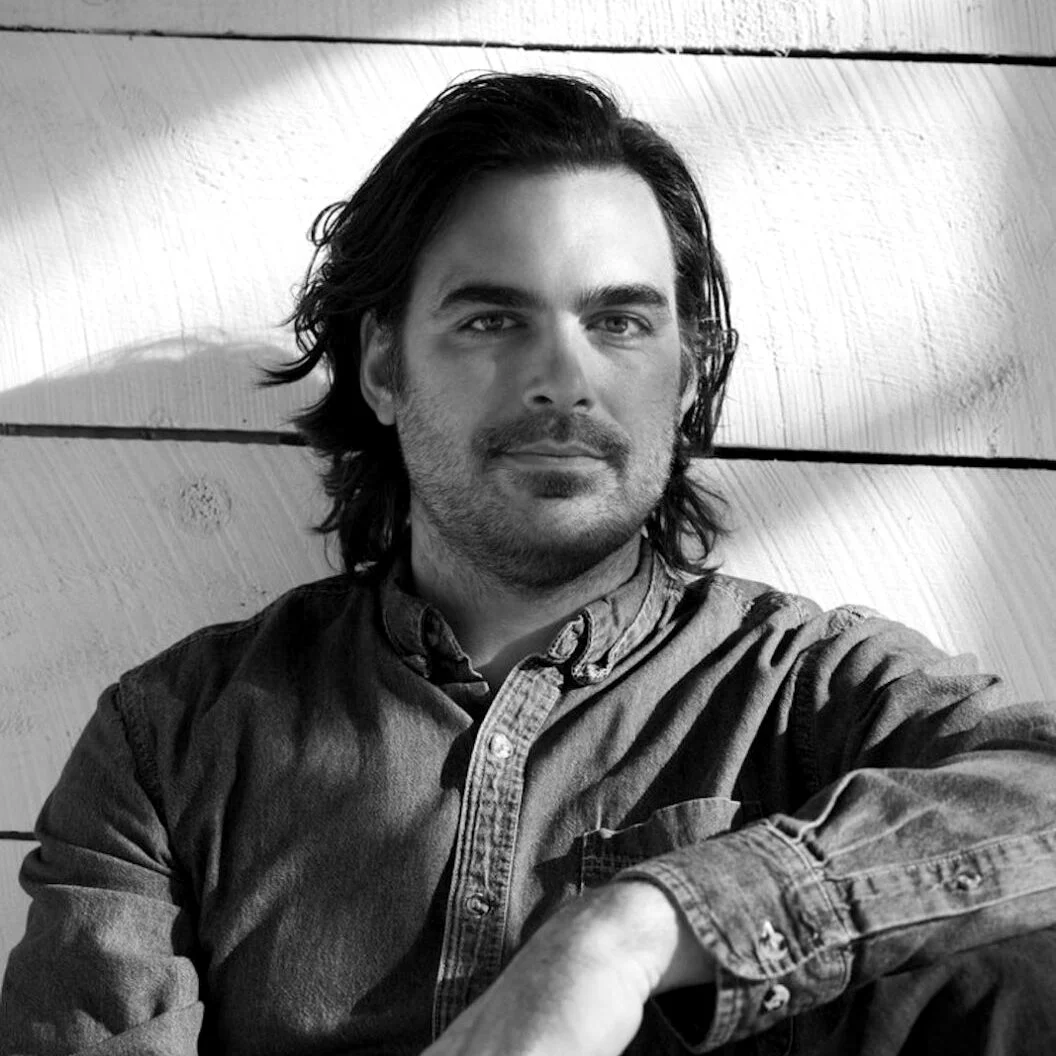
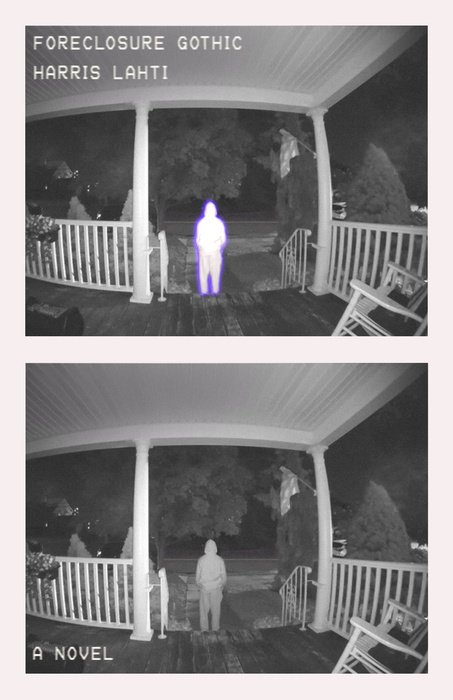
Today I'm speaking with Harris Lahti, whose debut novel Foreclosure Gothic (Astra House) has found fans with its "tight, lyrical prose" (The Drift) and distinct narrative, which The Believer called "escape from escapism." But not everyone was impressed, of course. In fact, I asked Harris to do this interview after seeing him tweet, "my novel has the lowest rating on Goodreads that I've literally ever seen lol." At the time of that tweet, it was 2.88—if not the lowest rating ever, then certainly quite low. (Mein Kampf is at 3.17.) To get started, I'm curious if you read all of your reviews (professional and user-generated), and how you feel about the book's reception generally?
Oh God, the Mein Kampf rating ...
I do read everything, this being my first novel. The professional reviews were extremely validating; most, if not all of them, absolutely understood what I was attempting; more than I did sometimes, if I'm being honest.
That said, I probably would've tapped out of reading the user-generated reviews much earlier had they not been so negative. It was amusing at first; I celebrated them, envisioning ruining some normie's day at the beach. I have always cut my teeth on arch books, where you can sense a secret enjoyment behind the discomfort of the text. But then it quickly became demoralizing. Not insofar as the consistently low ratings, I expected as much; good art, I believe, should strive to be polarizing. Giancarlo DiTrapano once said, “You know what everyone likes? Water.” And no one wants to read the novel's equivalent of water; they want acid, or so I thought. It was more with who appeared to be posting them.
Andrew ... the horror lit community fucking hates Foreclosure Gothic. Something about the way each chapter builds suspense while thwarting the tidy resolutions of gore or ghosts really rubbed that subsection of readers the wrong way. Which was more or less my intent: to break off the suspense in a way it can't really dispel; so it doesn't stay on your nightstand, but follows you like a demon to hot yoga or the grocery store or wherever.
One of my favorite user-generated one-star reviews that really sums up their general point of view came from the Goodreads account "is there blood?", which simply stated: "Not until the end." And if you know what happens at the end, you really have to ask yourself: Dear god, what would be enough!? It seems more horrifying and compelling, at least to me, if the blood doesn't come.
But to answer your question, I'm still not sure about the reception—the way my Goodreads tweet went viral is interesting; I don't rightly know. I want to be read by larger audiences, not relegated to highbrow literary stuff; so right now, it’s my hope that maybe the book was only reaching the wrong sick puppies.
You're touching on a general feeling of irresolution, if it can be put so simply—something I also found in a few of the professional reviews.
Brooklyn Rail: “Lahti is a master of the portent, but not necessarily of follow-through. Often the novel acts like malfunctioning GPS, the kind that announces you’ve reached your destination when it has simply deposited you at the same cul-de-sac for the third time running.”
Publishers Weekly: “Lahti introduces sinister details—Junior claims to know about the bodies, which were buried on the property in the early 19th century; one of their tenants tramps menacingly through the garden—but they’re never fully explored or incorporated into the plot.”
The Baffler: “Within a two-hundred-page history of multiple generations, we move at too close a clip to consider what grows in the gaps between superstition and rational fear.”
Given the general consensus here, do you think it's unearned? Reading these, do you wish you had done something differently, or is this the natural flipside to your execution of your vision of the book?
You just pulled the only three negative lines out of all of the reviews! (As far as I remember, anyway ...)
But no, I don't think I can beat those allegations. But I also don't think I might have approached anything differently.
I'm talking about irresolution, yes. But I'm not even sure if I even considered that when writing Foreclosure Gothic. Within its unresolved climaxes, of which there are many, I think I was far more focused/interested in what was or wasn't being revealed in those moments, as well as what was then carried from them into the next chapter I was writing. I didn't write the book linearly; I wrote the first chapter, then the last chapter, then synthesized threads of each to write the next, and so on. The dialectical method, baby! That way, the overarching story, as it were, was always going to be roped together by association, or rhizomatically, not by some grand overarching plot.
Given that focus and Foreclosure Gothic's episodic structure—the half-century or so it's attempting to cover—elements were always going to have to be dropped or ignored. At that speed, the recursive dragnet can only hold so much. But it was worth the cost by opening up space to focus on the immediate energy at hand. Momentum is everything. Later in that review at The Baffler, Carina Imbornone so brilliantly refers to the novel's flow as a “bouncing peak of plotlets,” and I feel this really encapsulates that vision. “It's all saw-dust, anyway,” right? To ask these people to perseverate one or two climactic events for their whole lives seems disingenuous and not true to life. With the years, realism demands their lives should march on. Everything shouldn't be considered. (There is literally a chapter with a malfunctioning GPS.) And then, as this timeline continues stretching, and stretching, the overarching story then becomes more about what associations the reader might draw and what new meanings or interpretations might spark inside of the synapse between what's being remembered and repeated through their lives. It's an impressionistic approach, undoubtedly, but hopefully a more engaging one, leaving space for the reader; I was attempting to write the book I like to read.
So it seems that most of what your readers found lacking isn't something that you would, in the end, change. But I now want to turn to some of the reviews that hit at other parts of the book, and get your reaction to them.
I found this review, on Goodreads: “Weirdly misogynistic, dull, and unnecessarily florid. The pictures included add nothing to the story. This wants to position itself as Gothic but merely uses Gothic plot points for shock value, without earning them.”
Did you come across this and, either way, how does it make you feel?
So for the past eight years, I've been a fiction editor at the literary magazine Fence, where we publish a lot of avant garde short stories—and a few times early on during editorial meetings, I remember another editor introducing a short story for consideration that I found imperfect, too heady, too raw; I'd be perplexed why they would even want to consider it. Then I would listen to the editor describe the piece and would slowly start seeing what they saw. More times than not, something early in the piece had turned me off and I'd stopped interacting with the story as art; I was trying to move on to the next submission, to save myself the time.
It's still something I struggle with: to allow myself the patience to meet the art where it is; to imagine each story as a piece that is already framed on the wall; as something I'm not allowed to touch; that I can't co-opt; with the earnestness it deserves.
So when I read that review, I see a similar state of mind. I see a person trying to reshape the bronze sculpture that they've deemed tasteless at the museum. I think a lot of people read like that now; like I did, with a closed mind; waiting, if not hoping to be turned off early on; believing art should be tailor made for them and affirm their worldview, instead of meeting the work where it is; instead of wanting to be shocked and surprised; without the benefit of the doubt.
But, also, on a visceral level, it makes me laugh because much of the "gothic" elements—the gravestones in the basement, the necrophilic racoon, the old lady chained up by the inbred twins, all of the rot and decay—come from my lived experience; in most instances, this gothic imagery posed a question I had set out to understand about my own life; it wasn't invented, but discovered, explored. I like gothic literature, but in no way fetishize it. The photos were included to shore up the authenticity of the piece, to insulate itself from accusations of satire or absurdity; maybe they didn't but I will say: the book sold as soon as I included them.
Do you think that that reader didn't come to your work with enough patience? Do you think that any work of value will land with a reader as long as the reader is willing to create space for it?
I think if a reader is willing to call your work misogynistic and florid, they are just not a reader for you—but I'm curious if you disagree.
I do. Or, rather, if not patience, enough flexibility? The “horror” label on Goodreads made the horror fans angry because it wasn't quite horror. The same way the “horror” label probably turned some literary fans away too. I come to books to be surprised; to bend my mind into new shapes; find new perspectives. But I don't think everyone does. When you come at anything with a preconceived notion, and it doesn't sync with your expectations, it's going to be disappointing. I understand that. I'd grimace too if I thought the ice cream I bought at the ice cream stand mysteriously tasted like a hot dog. The cover probably didn't help.
I want to disagree ... but with all honesty, she probably was never going to be a fan. I have a strong feeling that if you combed just about any male author writing a female character, I think you'd find at least one or two accusations of misogyny being leveled; it's just part and parcel of the world we live in, and I do welcome the attention being paid. Maybe she's right, I don't know. All critiques are valid. When I read something like that, I'm not offended, I'm more disappointed I can't hear more.
I'm curious: Did you ever receive any critiques like that for Something Rotten and the way it explores masculinity?
I believe so, yes, though I can't say any have stuck with me. Either way, if someone did feel that way about my writing I think I'd know what they meant. Do you have an idea of what this person meant when they called your writing misogynistic?
No, not really. Though, as a writer, I'm tempted to try to make something up, to point to this or that. But I also feel like I could find a map to the Arc of the Covenant, if I read anything closely enough with that mindset, you know what I mean?
On the topic of understanding what your readers mean, I'm curious about this review: “This book was interesting, however it also felt like repetition. I understand the metaphor's the author is trying to make within the book, it just fell flat for me.”
Do you know what metaphors she's referring to?
The family as a sort of ego death? Being a father and/or a husband as donning a sort of mask? The renovator of a foreclosed house as a sort of carrion bird? Life as a circle?
It's hard to say. Given the multiple POVs and timespan of Foreclosure Gothic, it feels ripe with metaphors to pull from.
Ideally, any repetition within the novel would complicate or change the perception of what came before it as well as what will be repeated later. But, like with music, if the same few notes are being played over and over, even the most compelling hooks can become less so. That might be the case here; readers are pretty savvy.
Something we've touched on a bit throughout this interview is the idea of expectations. What does a reader think about the book even before they'd read the first page? In that vein, I'm interested to hear what you think about this review: “unfortunately bland, but I think that's because this isn't marketed properly.”
When you go to an art museum, the art isn't organized by what paintings or sculptures are based on real or imagined things; the art isn't organized along fictional or non-fictional lines; tourists move through galleries, interacting with the art at face value. Maybe reading a book is a bigger investment of time, and therefore more of a return is expected, versus taking in an art piece. But generally, I think readers are less likely to approach books with that mindset.
When I read that review, it's a sentiment I've seen more than a few times, and I don't know what they can be referring to, other than the cover, which I think is incredible. It’s atmospheric and unsettling and eerie—all of which the book undeniably is. Furthermore, I think it's pretty clear what the book is if you scratch even, like, a centimeter below the surface: reading the summary or a blurb or the first page, even.
I also just disagree about the marketing? It is a horror novel, of sorts; the same way some of David Lynch's films are horror films. But the problem is: that's just not all.
I think an underlying issue here, which I see a lot, is that a genre tag (in your case, horror) was applied to a work whose audience might more naturally be that of literary fiction. Your book's biggest complaint seems to be that expectations of payoff aren't satisfied—and in this way, I wonder if marketing the book as hardboiled horror could have let down readers more in the genre camp. Do you think that's accurate?
Definitely. But also, what marketing? It's literally just the cover, and the tag on Goodreads, which I remember my publicist being perplexed by. It was nothing the marketing team had done. I think the cover is just that powerful; maybe it nudges certain readers' expectations in the wrong direction. There was another similar cover of two images of a racoon, one with glowing eyes, that might've appealed to more literary-types; but then once you realize what the racoon represents in the book, it was almost more horrifying to have it represent the entire story. Spooky things and unsettling things are two different things; but perhaps each phenomenon stems more from a feeling and is more difficult to identify and differentiate visually.
One thing I've noticed from reading your Goodreads reviews is that you actually didn't get a lot of DNFs, or did not finish’s. In a lot of ways, that's high praise (if enveloped in fairly low ratings). Does that mean anything to you and what do you make of it?
If what you say is true, absolutely. That's kind of everything to me; I'm not even sure if I care if you “like” the book, it's more if it affects you somehow. I think some of that can be contributed to mechanics: It's written in present tense, a very close third. I get in late, get out early. The action of each chapter is immediate and self-contained. “Action is drama,” as Aristotle once said. So, there's always something unfolding, even if it only keeps unfolding, and synthesizing, which only provides space for the reader to occupy and consider—or at least that's how I've always thought about my writing. At the very least, hearing that, it sounds like I was successful, in that regard.
Well this is as good a place as any to let you go, as you've been a good sport here. So to wrap things up, I'm curious if any of the feedback you've received—either from professional critics or those on Goodreads—has changed the way you're approaching your writing from here on out.
Hell no ...
And thank you! This was fun; I dig the project.